


Blogi

Imagine this scenario. Your company's marketing is in full swing. Content is published, campaigns are run, and tools are implemented. At some point, artificial intelligence also enters the picture. It's received perhaps with cautious enthusiasm. Perhaps out of necessity. And at the same time, a question arises that few dare to ask aloud:
What will truly come of all this for us?
Will AI replace marketing professionals, or should we be concerned about something else entirely?
Perhaps the brand's voice? Its distinctiveness? How our company feels to someone encountering us for the first time?
AI is often discussed in terms of efficiency, speed, and cost savings. But rarely do we pause to consider what is most valuable in marketing.
Human experience. Trust. Meaning.
In this blog, we're not asking if AI will take marketing jobs. We're asking how AI is changing marketing so that the right kind of work becomes even more valuable. And why it's more important than ever right now to consider who is guiding the technology and in what direction.
AI doesn't replace the marketer, but routine
AI is already a part of everyday marketing. It writes first drafts, analyzes data, generates reports, tests headlines, and optimizes campaigns. These are tasks that used to take time but didn't build value on their own. And, when AI takes over repetitive and mechanical work, the marketer's time is freed up for more essential things: thinking, making choices, and understanding people. In other words, it's not about jobs disappearing, but about the content of work changing.
Why does the AI discussion in creative fields become a matter of identity?
As in some other industries, those working in creative fields experience their work as more than just a profession. It's considered, among other things, a way of thinking, interpreting the world, interacting with people, and using creativity. When AI starts producing texts, images, and ideas, it challenges us to ask: What exactly is my expertise? That's why AI evokes strong emotions. Not because it's just a new tool, but because it touches upon professional identity. This is particularly evident in marketing, as we operate at the intersection of creativity and data.
AI makes good marketing even more valuable
AI can produce a lot. But it doesn't understand everything.
A question for AI - what should a brand feel like and what moves an audience?
Answer:
Right now, a brand should feel: calm, yet aware; human, not generic; thoughtful, not reactive; meaningful, not noisy.
And what moves an audience is that they feel: this brand understands the world on the same wavelength as I do.
AI's answer to a general question reflects a broader value-based brand thinking.
It doesn't, therefore, understand the cause-and-effect relationships of events connected to your industry's history, nor does it grasp the subtle nuances that have influenced your brand's history. Nor does it understand your customers' daily lives or those small, almost imperceptible signals that lead to insights pointing in the right direction. And it doesn't sense when a message's tone requires boldness and when a quieter approach, or how your brand should feel to a person at this very moment. That's why high-quality marketing will stand out from the crowd even more clearly.
AI-generated LinkedIn post about Creative Code:
“What truly moves an audience?
People are no longer just looking for products, but for resonance. They want to feel: "This brand understands the world the same way I do."
It's not about who shouts the loudest, but about who resonates the deepest.
When a brand dares to be silent when it has nothing to say, its voice carries more weight when it does speak.”
As more similar content is created than ever before, the brands that stand out are those
whose marketing teams dare to think creatively and who possess a strong, unique brand voice,
which builds credibility around the brand.
AI has brought efficiency and inspiration. Humans, in turn, provide direction, interpret, and bear responsibility. As marketing professionals, we understand its strengths and weaknesses.
What is AI already changing in marketing?
AI impacts marketing on many levels:
- data analysis is faster and more accurate
- personalization goes further than ever before
- content creation scales for different target audiences
- campaigns can be optimized in real-time
- customer experience is more continuously available through chatbots and automation
At the same time, ethical questions are highlighted: data protection, quality, and responsibility. AI is therefore a force that must be led, not merely used blindly and trusted to automatically produce excellent results. We personally believe that AI is not a threat or a magic solution, but one important tool among others.
The role of the future marketer
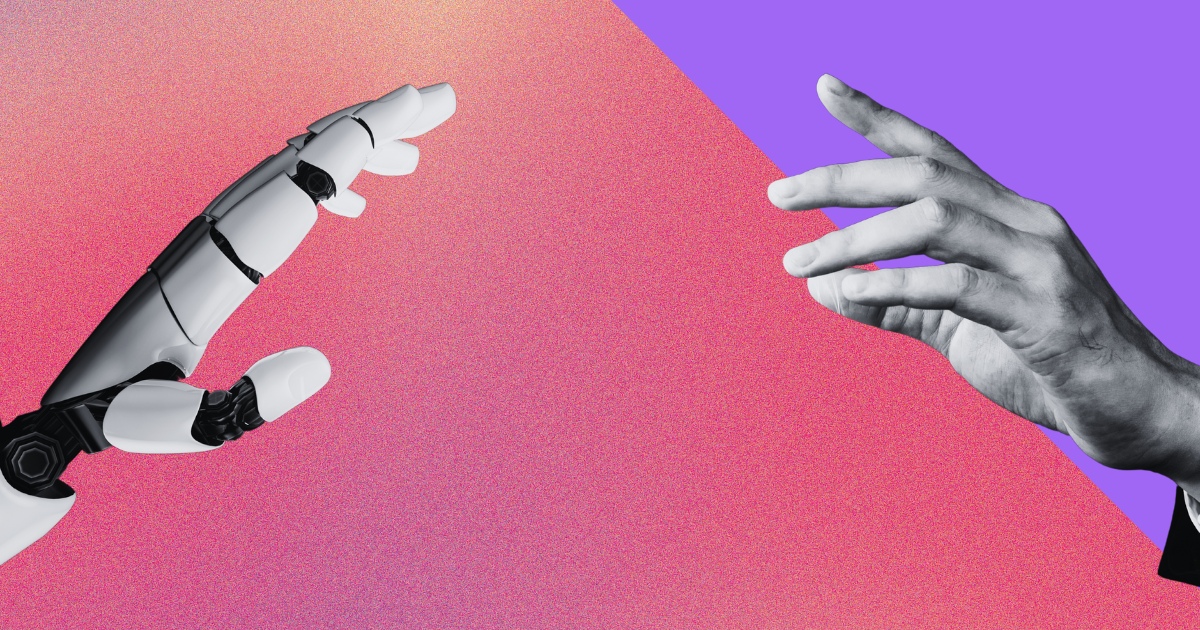
In the future, a marketer's value will stem from understanding people, rather than focusing too much on data. It's also important to be able to build meaningful stories and marketing entities, and to make strategic choices supported by technology. One must also be able to manage the brand's voice and overall presence, and to weigh when and how AI should be used in marketing. So, this is not about an opposition or competition between humans and AI. Together, we make marketing stronger than either could alone. And that's why we build marketing where people are always at the core, with AI as a support.
AI in marketing, AI and marketing, future of marketing, creative work and AI, content marketing, brand strategy, marketing agency