




Blogi
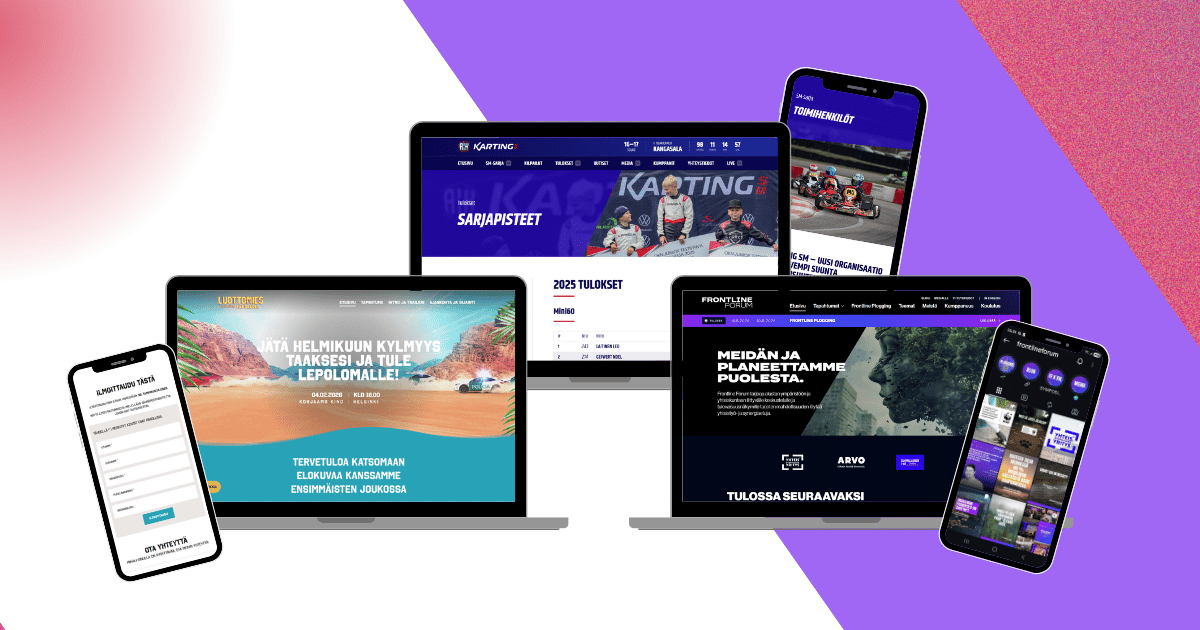

When browsing different company websites, you’re bound to come across customer stories, references, or case studies. But why are they so widely used?
A company can claim on its website that it is experienced, expert, and reliable. However, when it comes to making a purchasing decision, it’s more compelling to see what those words actually mean in practice.
That is why references are one of a company’s most important marketing assets.
When a potential customer evaluates a prospective partner, they usually want to know at least three things:
- Has the company solved similar challenges before?
- How does the company work in practice?
- What kind of results has the collaboration achieved?
A good reference provides a concrete answer to these questions. It makes visible the work that would otherwise easily remain at the level of service descriptions and marketing slogans.
This is especially important when a service is difficult to evaluate in advance. The quality of website development, branding, marketing strategy, or content production cannot always be determined by the price of a quote or a service description. The final result only emerges through the actual work.
That is why a reference can tell a potential customer much more than a mere promise of expertise.
What do references mean in marketing?
A reference is a description of a completed customer project, collaboration, or achieved result. Its purpose is not just to show what a company has done, but to help the reader understand how the company thinks and acts in a real-world situation.
A reference can be, for example:
- a customer case study on a website
- a project showcase
- a customer testimonial
- a video interview
- a before-and-after presentation
- a more in-depth customer story
Form matters less than content.
A good case study explains the client's initial situation, the goals, the solution, and the project outcomes. This makes expertise tangible.
When a company simply states that they have redesigned a website, the information remains quite generic. When they also explain why the site was redesigned, what improvements were sought in the user experience, and how the new structure supports the client's business, the reader gets a much better picture of the work involved.
Why do case studies influence purchasing decisions?
In B2B buying, decisions are often made even before the first point of contact. Potential customers explore the company's website, compare alternatives, and try to form an impression of what kind of partner they might be.
At this stage, case studies have one specific task: they reduce uncertainty.
A potential customer cannot yet know what it would be like to work with them specifically. However, they can see the types of situations the company has solved in the past.
That is why a case study combines three things:
the client's situation + the work performed + the end result.
It is a much more concrete way to demonstrate expertise than a simple list of services.
Case studies help compare one's own situation
A good case study helps the reader recognize something of their own situation.
If a company is considering a website redesign, it may be more relevant for them to see an example of a similar project than to read ten paragraphs about what a web service includes.
The same applies to branding, content, and marketing development.
In Creative Code's own case studies, for example, in the Wilhelmiina Palvelut website redesignthe starting point was the functionality of the website from the perspective of both the client's daily operations and the user. The project integrated the website's structure, usability, and content.
Such a case study communicates both the project's goal and the way of thinking behind it.
Case studies make expertise tangible
Expert services are easy to describe in abstract terms.
A company might claim to be strategic, customer-oriented, experienced, or results-driven. All of these may be true, but the reader is still left asking:
What does this look like in practice?
Case studies provide the answer to exactly that.
They can show, for example:
- what kind of problem the client wanted to solve
- what was decided to be done in the project
- what choices were made along the way
- how different areas related to each other
- what the end result was
This is where case studies also become strongly linked to a company's brand.
A brand is not just visible in a logo or visual identity. It is visible in how a company talks about its clients, what kind of problems it highlights, and how it describes its own way of working.
That is why case studies can also be a way to make a company's brand visible in practice.
If you want to explore the significance of branding from this perspective in more detail, our article on corporate branding examines how a brand manifests in practice and how it helps a company stand out.
A good case study tells a story of change
Describing the end result of a project is important, but a good case study does not start with the result.
First, you should describe where the client was before the project.
That way, the reader better understands why the work performed was necessary.
1. The starting point
Briefly describe:
- what the challenge was in the client's current situation
- why change was needed
- what the goals were
The starting point doesn't have to be dramatic.
For example, a website problem might simply be that the site structure no longer reflects the company's current service offering. Or perhaps the brand has evolved in different directions over the years, making the messaging look inconsistent across various channels.
The key is to give the reader a reason why the project was undertaken.
2. The Solution
Next, describe what was done during the project. Avoid just listing tasks; instead, explain the thinking behind the solutions.
Why was a specific structure chosen? Why was the content changed? How did you aim to simplify the user journey? How was the brand reflected in the implementation? This turns the case study into a description of your process rather than just a portfolio piece.
3. The Result
Finally, describe the outcome of the project.
Results can be numerical if they are measurable. For example:
- number of inquiries
- growth in web traffic
- increase in visibility
- sales performance
- number of participants
- user behavior on the site
However, not all project results can or need to be expressed as percentages. Qualitative changes can be just as significant.
If a website is easier to navigate after a redesign, the company's services are better understood, or the brand looks consistent across all channels, that is a real change that supports business.
References are more than just a portfolio
One common way to use references is to place them on a dedicated portfolio or case study page on your website.
That is a good starting point, but the role of references can be much greater.
They can serve as part of your entire marketing ecosystem.
A good client case study can, for example:
- help a potential client evaluate a partnership
- support sales conversations
- strengthen the company's image as an expert
- provide content for social media
- drive organic search traffic
- make the company's brand more tangible
This is one reason why you should think of references as content rather than just portfolio items. When one good client story serves multiple areas of marketing, it becomes part of a functional whole.
Your website is a vital stage for references
A reference works best where a potential client is already evaluating your company. Often, that means your website.
However, the purpose of a website is not just to showcase the company. It should help visitors understand what the company does, who it serves, and why a partnership would make sense. That is why references should also be integrated into this bigger picture.
A good case study page can include, for example:
- a clear description of the project
- the project's starting point
- the implemented solution
- the final result
- the client's testimonial
- the project's visual elements
- concrete results where applicable
In addition, it can be useful to group references by service, industry, or project type, for example. This way, visitors don't have to go through all the content to find an example relevant to their own situation.
This is also directly related to the website's user experience. A good website doesn't just contain the right information; it helps the user find it at the right time.
Creative Code approaches websites from exactly this perspective: a website should be more than just a published site. It should support the brand, the user, and the business all at the same time.
References and search engine visibility
References can also serve search engine visibility.
This doesn't mean that every client case should be written for search engines. Quite the opposite. A good reference is born from the client's situation and the actual content of the project.
At the same time, however, it can naturally include relevant terms:
- service name
- client's industry
- problem solved
- technology used
- project type
For example, a customer success story about a website redesign can answer a search query related to website renewal, Webflow or a specific type of website project.
When content answers the right question, search engine visibility follows as a natural consequence.
Here, references are part of the same ecosystem as other content marketing and SEO efforts. A single case study won't determine a company's search engine visibility, but a collection of high-quality content can form a valuable asset for the website.
References on social media
A good reference doesn't end once the customer case is published on the website.
You can create multiple smaller pieces of content from a single project for different channels.
On LinkedIn, for example, the following often works well:
- the initial situation of the project
- one interesting solution
- a lesson learned with the client
- the final outcome of the project
- an expert perspective on the project's theme
In visual channels, you can showcase the project's aesthetic, before-and-after comparisons, or individual implementations. The key is that you don't need to copy the same content everywhere.
A single client project can provide material for multiple pieces of content when you identify different angles.
A good reference also tells the story of the collaboration
It is easy for references to focus solely on the end result.
However, it can be just as interesting to know what it was like to work with the client.
In professional services especially, a client doesn't just buy the end result. They also buy the process, decision-making support, and the experience of a project moving forward in a controlled manner.
That is why it can be useful to include details in a case study such as:
- how the collaboration began
- how goals were defined
- how the client participated in the project
- what kind of decisions were made together
- what the client gained from the project
This helps a potential client also evaluate what it might feel like to work with you.
In Creative Code's case studies, this is evident in the Frontline Forum project, where, in addition to the website and branding, the scope included content, email marketing, event marketing, and strategic support for partnership acquisition.
This example also highlights an important point: all marketing areas are not necessarily separate, isolated projects. If they relate to the same business goal, their combined impact can be more significant than looking at any single measure in isolation.
How many case studies should a company have?
There is no single right number. A few well-structured and relevant case studies can be more valuable than a long list of projects where each is described in only a few sentences. Coverage is more important.
If a company handles different types of projects, the case studies should provide a picture of the kinds of problems the company can solve. At the same time, it is worth considering how up-to-date they are. Old case studies can still be relevant, but if the company's services, brand, or way of working have changed significantly, an old portfolio may no longer tell the story you want to convey.
Case studies are, therefore, also a mirror of the company's own marketing.
The most important task of a case study
A good case study does not say:
"We know how to do this."
It shows:
Here was the client's situation. Here is how we approached it. Here is what we achieved.
The difference is small, but significant for the reader.
In marketing, trust is rarely built on a single claim. It is built on a series of observations: website content, brand, expertise, customer experiences, and how consistently all of these tell the same story. That is why case studies should be viewed as an integral part of your marketing, rather than as a separate portfolio section.
When your website, content, brand, and case studies support one another, potential customers can form a clearer picture of your company even before they reach out.
Frequently asked questions about case studies
Why are case studies important in marketing?
Case studies make your expertise tangible. They help potential customers understand the types of problems you have solved and how the collaboration works in practice.
What makes a good case study?
A good case study outlines the client's initial situation, the project goals, the solution implemented, and the final results. At its best, it also describes what it was like to work together during the project.
Should every project be published as a case study?
Not necessarily. Quality and relevance are more important than quantity. Choose case studies that showcase the breadth of your expertise and are of interest to your current potential customers.
Can a case study help with search engine visibility?
Yes, if the content matches the actual searches users are making. Customer cases often naturally include terms related to services, industries, and the problems being solved. However, case studies are just one part of a broader SEO and content strategy.
Where should case studies be published?
Your website is the natural home for more detailed customer stories. These can also be repurposed into shorter content for platforms like LinkedIn or other channels your company uses.
Summary: a case study shows what expertise means in practice
The value of case studies is not in showing that a company has completed many projects.
The value lies in the fact that they enable a potential customer to understand how the company solves problems and what kind of value a partnership can deliver.
A good case study:
- makes expertise tangible
- builds trust
- helps potential customers compare options
- supports the sales process
- provides content for other marketing channels
- can boost search engine visibility
- makes the company brand visible in practice
At its best, a case study is more than just a story about a past project.
It helps a prospective client imagine what working together could mean for their own business.
If you want to see what this looks like in practice, Creative Code’s case studies feature examples of various website, branding, content, and marketing projects.
Would you like to take a fresh look at your company’s case studies?
If you have accumulated case studies over the years, it is worth viewing them from a customer’s perspective every now and then: do they genuinely communicate what your company is capable of today and what kind of challenges you want to solve in the future?
If this sparked any thoughts or you would like to discuss how to make your own expertise more visible, we would be happy to talk.